Sunday, December 29, 2019

BOOK REVIEW | Looking Glass Friends by E.L. Neve

33312094. sx318

Looking Glass Friends by E.L. Neve follows the story of a man and a woman who married the wrong people. Neil feels stuck; he’s in a loveless marriage and is on the verge of ending his life when he is saved by a new pen pal, Ellie. Ellie finds herself in an equally loveless and unfulfilling marriage. Through their email correspondences, both Neil and Ellie find solace in each other’s intellect and wit, and soon find themselves falling in love.

There is a lot to like about this novel. For one, Neve knows how to construct a beautiful sentence. The novel is full of imagery, beautiful metaphors and figurative language. I often found myself marveling at how poetic it seemed. Her writing gives the book a dreamy feel, as if what you’re reading isn’t quite real, isn’t quite tangible. Instead, it’s floating among the clouds, which is exactly as it should be, for both Neil and Ellie are the kind of people who would live among the clouds.

That being said, the writing style is a double-edged sword. When it came to Neil and Ellie’s perspectives, it made perfect sense to keep the flowery, poetic style, but I was a bit confused as to why that style remained when the reader was given the point of view of Jake or Fay (Ellie and Neil’s respective spouses). Neither of those characters lent themselves to an imaginative or dreamy mindset and yet the writing didn’t change. I think this book would have been even more powerful if there was a clear cut style to each narrator.

Also, in terms of narrator, it was sometimes difficult to pin point which POV I was reading from. The book starts off as a third-person limited narration style, but then there were a few instances when the book suddenly became third-person omniscient. Why was I reading about Neil’s feelings in Ellie’s chapter? I’m not sure if this was simply a mistake or if the author wasn’t aware which narration style they wanted to go with.

There were a few grammatical errors, but nothing outstanding or jarring. For the most part, I noticed the author didn’t know when the place a period inside or outside of a parenthesis. For example, at 24% in the Kindle edition, we have this line: “(and would fire her, eventually, when the novelty wore off.)” This is written in the middle of a sentence so the period should actually come after the parenthesis. The only time a period goes inside the parenthesis is when the entire sentence is in it as well. There were also a few times the author forgot a comma or used a comma incorrectly inside of a parenthesis. Once again, these mistakes were very minor and if it weren’t for the fact that I’m an English teacher, I may not have even clocked them. None of them were dramatic enough to pull me out of the reading experience.

I believe it’s important to note for anyone interested in reading this novel that there are a few mentions of sex as well as a sex and almost-rape scene. I did not find any of it to be vulgar and it did not make me want to stop reading. There is nothing that is particularly explicit, but if you’re looking for a perfectly clean romance, this may not be for you. However, I would personally classify this as relatively clean.

I believe that hopeless romantics, people who love flowery and poetic writing and those who love literature – there were many references to great works of literature, particularly novels by Ayn Rand – will greatly enjoy reading this. However, those who have had marriages fall apart due to infidelity or who are greatly uncomfortable with the aspect of cheating, even emotional cheating, may want to steer clear.


[FOR THE PARENTS] Lie to Me by Kaitlin Ward

42898364. sy475

"Lie to Me," by Kaitlin Ward follows the story of a young girl who found herself in the hospital after falling - or being pushed - off a cliff.  The entirety of the book consists of her questioning everyone around her as she tries to find the answers as to what really happened to her.  Was she pushed?  Or was it an unhappy accident?  And if she was pushed, then...who hates her enough to want to kill her?

This was recommended to me by a reluctant reader at the school I'm currently teaching at. She absolutely consumed this book and another by the same author. She's 13, a typical middle school girl and I think the exact demographic that this book is aimed for.

I'm 29, well-read and I figured out the mystery just from reading the back cover. I'm not this book's demographic and it's not a book that is going to transcend ages.  It's very much meant for middle school readers and there's nothing wrong with that. 

I think this is an excellent book for reluctant readers because the action starts from the beginning. It does grab you from the first page and doesn't let you go, which is fantastic for those who find reading boorish.  There's quite a bit of romance and I would even say the romantic aspect is a bit more prominent than the mystery aspect, which I was a bit bummed about, but for young girls, it's certain to keep them entertained.

Most readers will likely gather what the mystery is at least halfway through the book, but there is enough of a creep factor to keep them reading.  

What I liked:
  • The heroine and her brother have a nice relationship
  • Depression is handled delicately and mental illness in general is not portrayed as anything to be ashamed of.
  • Bisexuality is represented well, as is lesbianism.
  • The family unit is solid and there is respect for the parents.
  • Adults are not made out to be the bad guys and are turned to for help.
What I would warn parents about:
  • There is a lot of physical contact; while there is no sex, there is plenty of kissing, handholding, etc.
  • There is one scene in particular where she grabs her boyfriend by the belt in her bedroom while they're kissing; it does imply that they could go further, but they don't
  • There is quite a lot of mention of homosexuality (bisexuality & lesbianism)
Who I would recommend this for:
  • Young people who are questioning their sexuality.
  • Reluctant readers. (Her writing style is very easy to read and flows well.) 

Overall, I think this is a nice 7th or 8th grade book for a quick read and might get those reluctant high school readers finally opening a book! 

ANNOUNCEMENT: Blogging Return & Upcoming Series!


Well, hello everyone! 

It's no secret that I've been gone from this blog for quite some time.  I even need to relink my social media accounts so that I can stop seeing those strange smiley faces!  I wanted to re-evaluate the way I wrote reviews; how much subjectivity do I want to place in a review?  How do I feel about the star system? (Spoiler: I don't like it and therefore do not give star ratings anymore unless it's a 5* because it just resonated with me.)  How do I want my reviews to be formatted?  Who am I trying to reach? 

All of these have been on my mind as I've toyed with the idea of coming back to book blogging and book reviewing.  Literature has, and always will be, my first love.  And I'm so grateful that I've been able to translate that love into others through my profession.


I've been having a great time living life and settling into my role as a teacher.  I've been teaching for 8 years now but I've been a middle school teacher for the past 4.  I'm currently finishing my MA and working part-time as an English and History teacher at an Orthodox Jewish school.  (They have their Judaic studies in the morning and their General studies in the afternoon.)  Teaching middle school has really opened my eyes to what students are reading and how much I want to encourage parents to let their students read and read voraciously.  Trust me, middle schoolers know so much more than you think and being exposed to new concepts is only going to help them become better adjusted adults. 

Thus my new series that I'll be starting on here is going to be called FOR THE  PARENTS.  These are going to be reviews of middle school/YA books where I will tell you what I liked about the book while also being open and honest about the content so that you can decide if your child is ready for it.  I do really recommend that parents think long and hard.  Literature is a good thing.  Reading is a good thing.  I hope that these reviews will help parents encourage their children rather than restricting them.


I've also been doing so much traveling, as you can see from some of the pictures I've been placing in this post. (I do have a travel blog here, by the way, if you're curious!)  Traveling and reading are my true passions, my true hobbies.  I've been lucky enough to travel to over 20 countries and teach in 4 of them.  And soon that will be 5!  I am currently in the midst of accepting a job in Kuwait for the upcoming 2020-2021 school year as an English teacher at an American Academy.

So what does this mean for my reading preferences?  On top of the FOR THE PARENTS series, I'd like to also start a BECOMING CULTURED series, where I read works by people of other cultures and about other cultures, whether it be historical or current.  This can include fiction and nonfiction, too.  I have been adoring traveling to new places, learning about events and seeing things for myself - as well as meeting absolutely lovely people - and now I'd like to take my mind there, too, when I'm unable to travel due to work. 


So, that's basically my long winded way of saying I'm back to book blogging & book reviewing and I hope to connect with the community again.  Let's get reading!

Friday, September 27, 2019

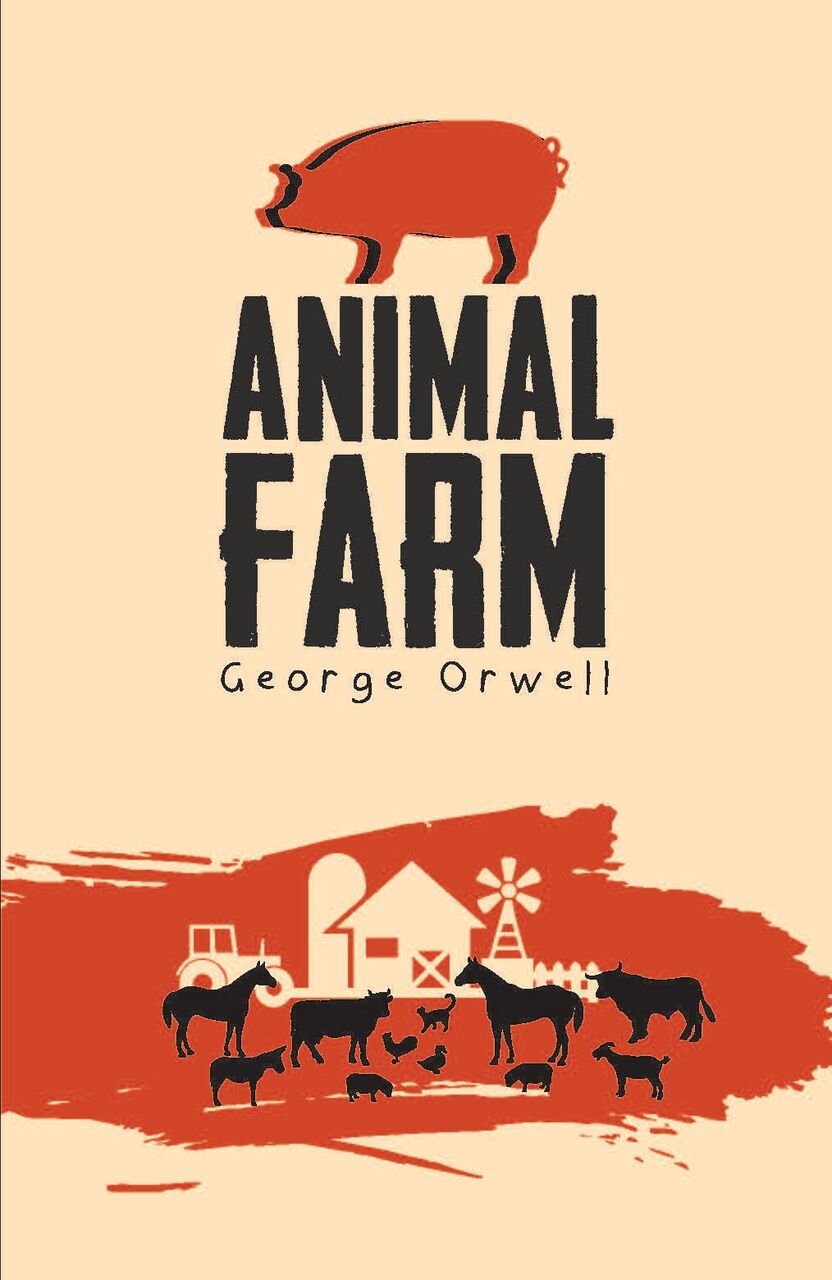
BOOK REVIEW | Animal Farm by George Orwell


Image result for animal farm


This isn't like my normal book reviews.  Rather than diving into the nuances of the book, I'd rather talk about my experience teaching it.

I think I'll always be grateful to this book.

A lot of teachers end up using this book in high school. I know people who were first introduced to it in 9th, 10th or even 11th grade. (Personally, I first entered "Animal Farm in 9th grade.) But, I think, in order to fully utilize this novel's importance and severity, it's best to introduce it in middle school. This is a book that grabs kids, it opens their eyes and it makes them curious about the world and, more importantly, question what they've been taught.

I taught this to my advanced 7th grade and this was the book that really enchanted them and got them into the written word. Introducing novels has been a breeze since. Orwell has this fantastic way of presenting something terrible and making it even more dreadful than before. Unlike other classics, where the reader might feel a bit of a disconnect to the characters due to all of the other allegories, symbolism and motifs in the novel, it was still easy to connect to the plight of all the animals and to feel their betrayal as my own as the pigs began to take over.

And recently I taught it to my 8th graders this year.  This is a group of self-proclaimed "book haters," and yet by the time the book was over, they were hooked.  One of my students even cried after reading Boxer's plight.  I'm almost worried that I'll never be able to pick a book that grabs their interest like this one did for the rest of the year. 

A great anecdote I can share from teaching this novel came from when Mollie mysteriously disappears from the farm. When we got to that scene, one of my students who never loved reading to begin with finally began to find himself consumed in Orwell's totalitarian world.

Me: Well, what do you think happened to Mollie?
Students: She got sold! She ran away! She's hiding!
Me: Maybe, maybe.
Student: *jokingly* Maybe they killed her.
Me: *stares at student for a second, then shrug*
Student: Wait, what? Wait, are you serious?
Me: I'm just saying it's a possibility. You never kn--
Student: No...No! NO! Not Mollie!

And that is the magic that is uniquely Orwellian.

Saturday, December 29, 2018

BOOK REVIEW | Lord of the Flies by William Goulding

7624

What a pity that so many adults had a bad experience with this novel in  high school that they never want to pick it up again. 

At first glance, this novel seems innocent enough: a group of English school boys find themselves stranded on a remote island and must learn survival skills to stay alive.  However, the direction that the author took this seemingly harmless premise could make anyone fall into an existential crisis. 

Truly, the mastery that went into "Lord of the Flies" is astounding.  There is so much allegory just leaking off the pages that sometimes I think people can get too caught up in the intellectual aspect of the novel.  And there truly is a lot to be discussed.  The island follows the same fate as the Garden of Eden.  As the boys fall more and more into their darker selves, the island itself becomes a character taking on an evil turn.  

In fact, this book has been banned and challenged relentlessly due to the fact that, in the end, Goulding's message is that all of humanity is evil at its core

This novel focuses on the murder of reason, the death of goodness and the dark truth of what it means to be human.  So much is condensed into this roughly 200 paged book that it's hard not to find yourself in a deep conversation about the human condition.   However, even though it is a well of conversation starters, as an adult I found myself more and more affected by the boys' deaths and descent into madness.  When reading this as a high school student, I was encouraged to focus only on the academic aspect of the novel.  But when reading it as an adult, I couldn't help but focus on the emotional side of it, too.

There were times when I read this that my blood ran cold.  Other times I felt myself in such shock that my body went numb.  I didn't have any of these experiences when I was a teenager.   I didn't have a connection like this with the book before.

I can't recommend that adults re-read (or read for the first time!) this novel enough.  And I hope in doing so, they'll find more meaning and more emotion than they experienced before. 

Wednesday, March 22, 2017

BOOK REVIEW | White Noise by Don DeLillo

I don't know, man. DeLillo might be my new favorite author.

There was something really poignant in "White Noise"; something constantly expressed and yet glossed over at the same time. DeLillo's novel is a commentary on our waves and radiation in life: how we never have true silence, we are constantly bombard with technology, how we have faceless voices speaking to us through screens and cracks and telling us what to do. How our life has become a simulated version of itself that is unprepared for disaster. 

Each character is a caricature. They are all overdone and melodramatic. The kids are super modern (for the '80s), the wife is obsessed with health and vitality and the father, our narrator, has an obsession with Hitler. Their dialogue is hilarious, but under all of it is this Lacanian philosophy that comes up every time someone asks, "Why is death?", "What is dark?", "What is light?", "What is...". It is the question of our reality. If our reality is made up of words and words are subjective, then does that mean our reality is subjective, too?

This book just resonated with me for some reason. Each point that DeLillo makes is hidden under the simplicity of his dialogue, the insanity of the character's actions and the hilarity that ensues, but there are so many points to be made in this book that I began to see everything as allegorical or philosophical. The grocery store is not just a store, the mushroom cloud is not just a cloud, Murray is not just a man... and I can back up every single crazy idea and prediction I had in this book with text because it is that kind of book where your interpretation just can't go wrong.

Read it. Even if you hate it, I think you'll understand it.

Wednesday, December 10, 2014

BOOK REVIEW | Crown of Midnight by Sarah J. Maas

Just a warning: there are some spoilers in this review that I did not tag, so read at your own risk.

(Also, I feel like I need to say that this review does not reflect what I think of the author herself or of other readers who enjoyed this series.  You are free to love what books you love!  I'm just not able to jump on this bandwagon. D:  Stay chill, my friends. :))

One sentence summary: Celaena Sardothien is now the King's Champion, and must keep up a daily charade of pretending to be his ally while simultaneously plotting to tear him apart; meanwhile she keeps discovering more secrets below the castle, secrets so deep that they could destroy the world.

I once mentioned that a book made me so frustrated that I actually threw my Kindle. Well, this is the book in question. And it was more of a toss. Onto my bed. But the fact remains that I was so flustered and even angered by the ending of this book that I was willing to make my beloved Kindle airborne.

I desperately wanted to love this book, just as I wanted to love the first in the series. Normally when a series becomes wildly popular, I either appreciate the hype or I can at least understand it, but with this series, I honestly just can't. I really do not understand why this series is so popular, and I really do not understand why people prefer this book to the first. I found this book to be worse.

Let me start with what I did like:

Celaena's breakdown: This actually happened in the fourth novella as well, which was why it turned out to be my favorite. Her breakdown provided a much-needed vulnerability to her character for the reader. It was very human of her, and for once she didn't seem so vomit-inducingly perfect. It also reminded us that she actually is an assassin and will always turn to bloodlust when confronted with such strong emotions.

The underground everything: I was glad to see that the underground passageways were still alive and well, considering they were my favorite part of the first book. The mysteries and discoveries and cool traps and doors and hallways, etc. I do have to admit that it's taking a bit of a weird turn, but I still like it.

Celaena actually killed people!: Yay. Because she is, you know, an assassin.

Perhaps the biggest issue is that I simply did not like any of the main characters or the overall plotline; considering these two aspects are what basically make a novel what it is, I may have been doomed to dislike this series from the beginning. Celaena is too perfect, Dorian is too boring and Chaol is too predictable. They all are so stuck in these personality traits that it's hard to see them as three dimensional characters. They are flat and, quite often, unlikeable. I honestly think that Mass has a lot of good ideas, but they're buried underneath her inability to create complex characters and her juvenile writing.

It's not that she's incapable of creating an interesting character, it's just that there's one aspect of them that's so heavily focused on that any other intended trait gets pushed to the side, making them seem like caricatures. Even Nehemia, perhaps the most interesting character, fell prey to this. Maas made her so noble that she seemed almost inhuman. And that's the issue with these characters - they don't feel real. If I'm constantly reminded of how two dimensional a character is, how am I supposed to get into the story?

I'm also extremely unimpressed with the reliance on the shock value, which this book had. I have been in Celaena's head, both as a first person narrator and as a third person narrator. There should be no reason for her hiding the fact that she's a Queen (which wasn't much of a shock) and that she's a faery (which was) from the reader. How could Celaena not once thought of those things? How, as a reader, am I expected to just passively accept this as valid instead of as a ploy to cover up a mediocre story? The thing is, had Maas no decided to pull this, I might have actually enjoyed the book. If she could have just revealed this earlier and relied on her writing to further explain it to the reader while hiding from the characters, she might have had the opportunity to create something fanastic. Instead, she went the cheap route which only served to highlight all of the other instances in the book that felt poorly written.

The ending felt so rushed and so disorganized that I felt like I needed to just buckle down and finish it in order to get it over with. After the original reveal, which is Celaena's faery power, I honestly started finding everything to be ridiculous. Maas seemed to have gone to such lengths to destroy the image of Celaena as a Mary Sue, and then she adds the superhero power onto her, putting the character right back where she started.

All in all, I am still a bit baffled as to why this series is as popular as it is, but I know that I'm very much in the minority on this. I cannot look past being emotionally manipulated by the author and I can't shake the "big reveals" as anything other than a cheap trick to cover up insecure writing.

Friday, December 5, 2014

BOOK REVIEW | Paradise Regained by John Milton

Paradise Regained, while not at the same level of rhetoric and literacy as Paradise Lost, does offer an interesting insight into Jesus' temptation in the wilderness. Milton uses language in order to assert Jesus as the Messiah, and Satan as an agent of evil, which is being used by God, to help that assertion. Paradise Regained is largely static. There is no real rise and fall of tension and there is no real climax, either. Rather, all of the stress is placed on the importance of language and silence.

When comparing Satan and Jesus' speeches, there is an immediate difference: Satan's speech is clouded in "persuasive rhetoric," whereas everything that Jesus says is plain and accessible. Jesus does not need fancy language in order to convey His message. Instead of trying to make Himself more confusing, the Messiah takes language back to its roots and uses it as Adam did (in a way that would be able to communicate with God directly) by keeping it as simple and as close to God as He can.

In his brilliant essay, "The Muting of Satan: Language and Redemption in Paradise Regained," Steven Goldsmith argues that the language Jesus is using is not the same as the language Satan is using. Rather than stay silent while Satan tempts Him, Jesus uses the fallen language in order to thwart Satan and beat him at his own game. In the process of using this language, Jesus is paving His way towards becoming the Messiah by silencing Satan so that His voice will be heard. Underneath all of Satan's fancy word plays lays absolutely nothing. He is the "linguistic anti-christ," who "has nothing to express."

Jesus finally asserts Himself as Messiah and readies Himself to be "all in all" with God towards the end of the poem:

"To whom thus Jesus: Also it is written,
Tempt not the Lord they God, he said and stood.
But Satan smitten with amazement fell."


At first glance, it is easy to see that Jesus and Satan are opposites: one is standing and the other is falling. However, the fact that Jesus "said and stood" is important. It parallels God's perfect speech during the creation of the world: "God said... and there was." This is the pinnacle of the poem - the point where Christ has officially triumphed over Satan and can now go public as Messiah. Satan is allowed to roam the fallen world and has even created a kingdom of his own in Hell and in the sky (according to Milton) where he perversely "blesses" people with wealth, glory, etc. Jesus has to enter the fallen world and first silence its biggest voice before He can redeem it.

"Queller of Satan, on thy glorious work
Now enter, and begin to save mankind."


According to Goldsmith, "the process of verification that is the purpose of Paradise Regained has been accomplished." By using language, Milton paralleled Jesus' own entrance into the world as Messiah by silencing Satan and glorifying Christ.

While I still believe this is not nearly as fascinating as Paradise Lost (and is also much shorter), it's still well worth the read if you've read the former. They really are two parts of a whole. Satan's temptation of Christ not only mimics his temptation of Eve, but it is also referenced throughout the entire poem whenever he feels foiled. This is the finale to Paradise Lost.

Tuesday, November 18, 2014

BOOK REVIEW | Wither by Lauren DeStefano

Wither follows the story of Rhine, who is living in a world where a disease has wiped out most of the human race, leaving only North America behind. Because of this disease, no one is able to live past the age of 20, if you're a woman, and 25, if you're a man. Rhine is forced into a marriage with two other girls for the sole purpose to produce babies, but she is finding that what she wants more than anything is freedom. Freedom from the disease. Freedom from her husband. Freedom from that mansion.

I know there are certain aspects of this book that have made people cringe. But, for me, the writing and the overall storyline made it well worth the four stars I gave. Let me start with the things that I noticed or others have pointed out to me.

In order of biggest inconsistency to least:

1. All of this snow that Florida can apparently create. As a resident of Florida, this made me cringe. Even if this were to take place in Northern Florida, it would be ridiculous. Perhaps there was some snowfall in Tallahassee back in 2010. I seem to remember news of it. But this was the type of snow that barely even made it to the ground because it was so cold. The snow that they talked about in Wither was somehow inches or more deep. All I could think of was, "What Florida is this?" My only reasoning was that maybe after the destruction of people (via virus), the state lines were re-done... but it was never explained to be so in the book. That bugged me.

2. Rhine never has sex. This did not make any sense. Now, I'm pretty laid back about sex in YA books. Sometimes it's unnecessary - actually, most of the time it's unnecessary. But in this case? Definitely necessary. You want me to believe that Rhine enters into a marriage which has the sole purpose to procreate and yet never has sex? I can see how DeStefano made Linden a weak man who wouldn't pressure her, but does anyone remember his father? This was not a man who cared enough about Linden, about anyone that he would sacrifice new life forms. If anything, he would have just killed Rhine, used her for scientific study, and then told Linden to move on. I don't care how anyone tries to justify this. Rhine would have been murdered or raped. The end.

3. North America is the SOLE survivor. Now, some readers may have already have read Fever and are shaking their heads at this because maybe this is explained in the second book. I took it as a projection of the character. North America is the only one they know to have survived. But if that is the case, why word it so? Why not simply say that instead of making a firm statement that North America is the only place with a population left.

4. Women dying before men. I suppose this was for plot purposes, but FYI, men die earlier than women. It's scientifically proven. It would have made more sense to have women die at age 25 and men at age 20.


Regardless, I still greatly enjoyed this book. DeStefano's prose was literally breathtaking. I read this in one sitting. She drew me in with her characterization and writing. I loved the character of Jenna and I could feel for the character of Linden. Oftentimes, I think that writing first person can greatly hinder a writer. This is because they are not able to explore any other characters than the one whose eyes the reader is seeing from. However, somehow DeStefano managed to make all of her characters seem so real and so vulnerable, even through Rhine's eyes. Because of this great characterization, I was able to look past more technical errors.

I also, personally, read books for the relationships and characterizations. I am a huge character reader dislike it when other characters are not fully developed. (Or if other characters all follow some kind of stereotype, etc). With DeStefano, the reader is able to understand a variety of personalities and view the story from different angles.

I purposely put the negative aspects first because I want people to understand how I could look past some blatant errors because of the beautiful writing and empathetic characterization. I would honestly recommend this to anyone. The pacing, the prose - it all made it worth it to me.

Friday, November 7, 2014

BOOK REVIEW | Secrets in the Sand: The Young Women of Juárez by Marjorie Agosín

Memory is the only witness that
Remembers the women of Juárez
Now statues,
Scattered bones,
Heads and little ears.


Haunting. Melodic. Tragic. Hearthbreaking. Necessary. These are the words I would use to describe this book of poetry.

Secrets in the Sand: The Young Women of Juárez is a collection of poetry written by Marjorie Agosín about the missing women of Juárez. From 2008 to 2013 over 211 girls have gone missing, but the murders have been going on since the 90s. The most disturbing issue of all is that the government has done nothing about it. In the introduction to these poems, written by Celeste Kostopulos-Cooperman, she writes that Mexico is a country with a "machista" culture that "often accuses women of provoking their abusers." With this kind of victim-blaming perpetuating the minds of those who are in charge, it's not surprising to see that there hasn't been much progress made towards stopping these murders.

She dreams about borders
A knife parts her in two
North and South
The body of a woman lies
In the middle of the night
In the middle of the day
In the middle of the light
On the border no one finds her
The desert petrifies her memory
The wind erases sounds
Everything is a darkness without sunlight.

She has crossed borders
And doesn't return home
Her mother wanders about crying
And looks for but does not find her

She crosses borders
Wakefulness and dream
Ashes and bonfires.


Agosín's goal was to give these women a voice. They have been permanently silences and are suffering a second death because of the negligence of the government. These murders have been going on for over 20 years with no change in the system or in the enforcement of the law. Agosín uses free verse, often conflating herself with the victims and reminding all women that in another time, in another place, or even tomorrow in your home, it could be you.

News Reports

The news report of Ciudad Juárez
Announces another death
The child says that it looks like the same woman
All of those women are the same, the father replies
The mother prepares the food
She sees herself in those women
The news report continues
They announce the winners of the soccer tournament
The child asks his mother why
They always kill the same woman
The mother's voice is strange
Like that of a little girl
And a well of silence
Forms on her sad mouth.


By using free verse, Agosín is able to give a voice to the traumatic experiences of the women who were murdered and the women who have been left behind. Sometimes I had to read a certain poem over and over until I understood it, and other times I read it over and over because it was just that powerful. Combining the Introduction, Poems and Afterword, there are only 143 pages in this book. (Which you can also cut in half because half of it is in Spanish on one side and English on the other, so if you're not bilingual, it will go even faster.)

This book has easily become one of my personal favorites. I really appreciate the accessibility of Agosín's style. Had she tried to make her poems more complicated, she may have run the risk of taking away from the violence. Instead, she made sure her poems were succinct, easy to understand and straight to the point - given the women of Juárez and the women who are terrified for their lives a powerful and booming voice.