Showing posts with label book blog. Show all posts

Sunday, December 29, 2019

BOOK REVIEW | Oedipus Rex by Sophocles

1554Free will does not exist.

At least, according to Sophocles it doesn't. Take Oedipus Rex as a perfect example, he hears an oracle predicting his future, a future so horrible that he cannot bear the thought of it. So he packs his bags and leaves his father and mother for fear of killing one and sleeping with the other. However, his fate follows him and he ends up doing exactly as predicted.

The real kicker here is that it's almost as if the gods are playing a joke on Oedipus. First they tell his birth parents that he is fated to kill one of them and then they tell his adoptive parents the same, forcing Oedipus to flee and, in turn, fulfill the prophecy on the way to Thebes. I'm sure the gods knew that this would be how Oedipus would fulfill his fate. He never stood a chance. He never had a choice.

There are a lot of different interpretations for Oedipus Rex, but I think an important aspect lies within these lines:

Pride is the germ of kings;
Pride, when puffed up, vainly, with many things
Unseasonable, unfitting, mounts the wall,
Only to hurry to that fatal fall,
Where feet are vain to serve her. But the task
Propitious to the city GOD I ask
Never to take away!
GOD I will never cease to hold my stay.


Fate has to be achieved somehow, so how, exactly, did Oedipus go about achieving his? It was Oedipus's own pride that kept him from truly heeding the oracle. Yes, he believed it at first and fled from Corinth in fear, but when it was presented to him in the most plain of terms, he could not accept it. Even when it was obvious, without a shadow of a doubt, that he had been sleeping with his mother and killed his own father, he could not believe it until he had been told by one who had witnessed his fate. His pride led to his fall, much as it does for most legends and myths.

Towards the end of the play, Creon says this:

Even you might trust what the God answers, now.

This line further cements my idea that it was pride that led to Oedipus fulfilling his own destiny. Also, I think that this is a hint to Oedipus that it was his own disregard for the gods that brought this upon himself. He was cursed from birth and yet still lived as a king.

The message is simple here: people should not be so conceited to believe that they can create their own fates. Your life is set in stone and there is nothing you can do to prevent what is supposed to happen from happening.

At least, according to Sophocles.

BOOK REVIEW | The Double Helix by James Watson

126061James Watson and Francis Crick made arguably the greatest discovery of the 20th century: proving that DNA is the building block of life and providing a solid structure for it. This short autobiographical account written by Watson provides an in depth - and biased - look into the discovery and also reveals the world of science, where fair play isn't always adhered to. 

I remember my mother talking about Crick and Watson when I was a kid learning about DNA in school and telling me how these two men stole a woman named Rosalind Franklin's idea and research and then got all the credit for it, including a Nobel Prize. Well, my ten year old (or so) self was appalled by this. She did all the work and they got all the credit? The injustice! Reading this was eye-opening for me, because yes, Franklin did not get nearly as much credit as she deserved during the time of their discovery (this was later remedied as best as it could be), but I would not necessarily say that they stole anything from her. Although, I suppose when it comes to her X-Ray of the B Form, that's pretty debatable.

Because this was written by Watson, this is simply his perception of how things went during this time of his life. I think that he didn't aim for objectivity in portraying the people around him, but rather tried to give his opinion and point of view. I do not think his portrait of Maurice Wilkins or Linus Pauling were particularly appealing, but they were his greatest rivals in the world of DNA, so he had to villainize them to make himself the hero. As my professor said, he turned Pauling into Goliath so that he and Crick could become the Davids.

It is extremely readable, but I am not its target audience. I have to admit that had I not read this for class, I may have never picked it up. Although my career is in the science field, it is in the world of computers, not biology and genetics. I greatly appreciate the work that Crick and Watson did, as well as Pauling, Franklin, Bragg, Wilkins, Perutz, Kendrew, etc. but I did not truly understand all of the science in this. On the surface level, it is understandable and I don't think any readers will ever feel lost. That's not what I mean. But on a deeper level, understanding the impact that each scientist had on each other, the impact of each step forward, each failed experiment and each successful experiment: I think someone who has a background in this type of science will really appreciate those aspects.

Overall, I'm quite happy to have read this. It provided a detailed account of one of the most monumental moments of modern history. Recommended.

[FOR THE PARENTS] Where She Fell by Kaitlin Ward

37825444. sy475


"Where She Fell" by Kaitlin Ward is about a young girl who falls into a sinkhole. As she journeys farther down into the earth via a cave opening that she escaped into, she discovers a group of people who have made this cave their home. And she quickly learns that the cave wants them to stay...
This book was at the book fair my school had recently and a student of mine picked out this book and "Lie to Me," by the same author. After finishing the latter, I thought I would try this one out, too.

I actually preferred this book, although my student preferred "Lie to Me." I thought there were a lot of creative elements in the cave dwellers and I was fascinated by the concept of the bioluminescents. I actually wished their origin had been explained a bit more. I enjoyed that, with the exception of the main character, no one feels safe -- I mean that it genuinely felt like any of them could have died, which is a bit of a surprise for a middle school book.

What I liked:
  • The main character has social anxiety and seeing her work through that was really cool; it was also nice to have a main character with a mental illness that is represented well.
  • All of the cave creatures.
  • The entire cave colony and its desperate form of government. 
What I would warn parents about:
  • Pretty steamy romantic scenes, which might be a bit too much for a middle schooler. It should be based on individuals and not something given to everyone.
  • Blood & gore, although nothing I would say that a middle schooler couldn't handle.
Who I would recommend this for:
  • Mature middle schoolers.
  • Reluctant high schoolers who are not on reading level. 
Overall, I thoroughly enjoyed this read.  I found it to be creative, adventurous and fun.  I did feel like the cave part dragged ever-so-slightly, however the author had to set the stage for what was to come, so it's perfectly understandable.  It was a very interesting read that I devoured within an hour. 

[FOR THE PARENTS] Lie to Me by Kaitlin Ward

42898364. sy475

"Lie to Me," by Kaitlin Ward follows the story of a young girl who found herself in the hospital after falling - or being pushed - off a cliff.  The entirety of the book consists of her questioning everyone around her as she tries to find the answers as to what really happened to her.  Was she pushed?  Or was it an unhappy accident?  And if she was pushed, then...who hates her enough to want to kill her?

This was recommended to me by a reluctant reader at the school I'm currently teaching at. She absolutely consumed this book and another by the same author. She's 13, a typical middle school girl and I think the exact demographic that this book is aimed for.

I'm 29, well-read and I figured out the mystery just from reading the back cover. I'm not this book's demographic and it's not a book that is going to transcend ages.  It's very much meant for middle school readers and there's nothing wrong with that. 

I think this is an excellent book for reluctant readers because the action starts from the beginning. It does grab you from the first page and doesn't let you go, which is fantastic for those who find reading boorish.  There's quite a bit of romance and I would even say the romantic aspect is a bit more prominent than the mystery aspect, which I was a bit bummed about, but for young girls, it's certain to keep them entertained.

Most readers will likely gather what the mystery is at least halfway through the book, but there is enough of a creep factor to keep them reading.  

What I liked:
  • The heroine and her brother have a nice relationship
  • Depression is handled delicately and mental illness in general is not portrayed as anything to be ashamed of.
  • Bisexuality is represented well, as is lesbianism.
  • The family unit is solid and there is respect for the parents.
  • Adults are not made out to be the bad guys and are turned to for help.
What I would warn parents about:
  • There is a lot of physical contact; while there is no sex, there is plenty of kissing, handholding, etc.
  • There is one scene in particular where she grabs her boyfriend by the belt in her bedroom while they're kissing; it does imply that they could go further, but they don't
  • There is quite a lot of mention of homosexuality (bisexuality & lesbianism)
Who I would recommend this for:
  • Young people who are questioning their sexuality.
  • Reluctant readers. (Her writing style is very easy to read and flows well.) 

Overall, I think this is a nice 7th or 8th grade book for a quick read and might get those reluctant high school readers finally opening a book! 

ANNOUNCEMENT: Blogging Return & Upcoming Series!


Well, hello everyone! 

It's no secret that I've been gone from this blog for quite some time.  I even need to relink my social media accounts so that I can stop seeing those strange smiley faces!  I wanted to re-evaluate the way I wrote reviews; how much subjectivity do I want to place in a review?  How do I feel about the star system? (Spoiler: I don't like it and therefore do not give star ratings anymore unless it's a 5* because it just resonated with me.)  How do I want my reviews to be formatted?  Who am I trying to reach? 

All of these have been on my mind as I've toyed with the idea of coming back to book blogging and book reviewing.  Literature has, and always will be, my first love.  And I'm so grateful that I've been able to translate that love into others through my profession.


I've been having a great time living life and settling into my role as a teacher.  I've been teaching for 8 years now but I've been a middle school teacher for the past 4.  I'm currently finishing my MA and working part-time as an English and History teacher at an Orthodox Jewish school.  (They have their Judaic studies in the morning and their General studies in the afternoon.)  Teaching middle school has really opened my eyes to what students are reading and how much I want to encourage parents to let their students read and read voraciously.  Trust me, middle schoolers know so much more than you think and being exposed to new concepts is only going to help them become better adjusted adults. 

Thus my new series that I'll be starting on here is going to be called FOR THE  PARENTS.  These are going to be reviews of middle school/YA books where I will tell you what I liked about the book while also being open and honest about the content so that you can decide if your child is ready for it.  I do really recommend that parents think long and hard.  Literature is a good thing.  Reading is a good thing.  I hope that these reviews will help parents encourage their children rather than restricting them.


I've also been doing so much traveling, as you can see from some of the pictures I've been placing in this post. (I do have a travel blog here, by the way, if you're curious!)  Traveling and reading are my true passions, my true hobbies.  I've been lucky enough to travel to over 20 countries and teach in 4 of them.  And soon that will be 5!  I am currently in the midst of accepting a job in Kuwait for the upcoming 2020-2021 school year as an English teacher at an American Academy.

So what does this mean for my reading preferences?  On top of the FOR THE PARENTS series, I'd like to also start a BECOMING CULTURED series, where I read works by people of other cultures and about other cultures, whether it be historical or current.  This can include fiction and nonfiction, too.  I have been adoring traveling to new places, learning about events and seeing things for myself - as well as meeting absolutely lovely people - and now I'd like to take my mind there, too, when I'm unable to travel due to work. 


So, that's basically my long winded way of saying I'm back to book blogging & book reviewing and I hope to connect with the community again.  Let's get reading!

Saturday, December 29, 2018

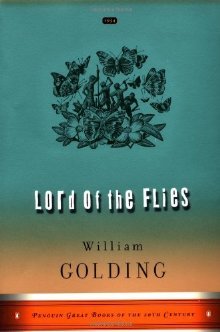
BOOK REVIEW | Lord of the Flies by William Goulding

7624

What a pity that so many adults had a bad experience with this novel in  high school that they never want to pick it up again. 

At first glance, this novel seems innocent enough: a group of English school boys find themselves stranded on a remote island and must learn survival skills to stay alive.  However, the direction that the author took this seemingly harmless premise could make anyone fall into an existential crisis. 

Truly, the mastery that went into "Lord of the Flies" is astounding.  There is so much allegory just leaking off the pages that sometimes I think people can get too caught up in the intellectual aspect of the novel.  And there truly is a lot to be discussed.  The island follows the same fate as the Garden of Eden.  As the boys fall more and more into their darker selves, the island itself becomes a character taking on an evil turn.  

In fact, this book has been banned and challenged relentlessly due to the fact that, in the end, Goulding's message is that all of humanity is evil at its core

This novel focuses on the murder of reason, the death of goodness and the dark truth of what it means to be human.  So much is condensed into this roughly 200 paged book that it's hard not to find yourself in a deep conversation about the human condition.   However, even though it is a well of conversation starters, as an adult I found myself more and more affected by the boys' deaths and descent into madness.  When reading this as a high school student, I was encouraged to focus only on the academic aspect of the novel.  But when reading it as an adult, I couldn't help but focus on the emotional side of it, too.

There were times when I read this that my blood ran cold.  Other times I felt myself in such shock that my body went numb.  I didn't have any of these experiences when I was a teenager.   I didn't have a connection like this with the book before.

I can't recommend that adults re-read (or read for the first time!) this novel enough.  And I hope in doing so, they'll find more meaning and more emotion than they experienced before. 

Wednesday, March 22, 2017

BOOK REVIEW | White Noise by Don DeLillo

I don't know, man. DeLillo might be my new favorite author.

There was something really poignant in "White Noise"; something constantly expressed and yet glossed over at the same time. DeLillo's novel is a commentary on our waves and radiation in life: how we never have true silence, we are constantly bombard with technology, how we have faceless voices speaking to us through screens and cracks and telling us what to do. How our life has become a simulated version of itself that is unprepared for disaster. 

Each character is a caricature. They are all overdone and melodramatic. The kids are super modern (for the '80s), the wife is obsessed with health and vitality and the father, our narrator, has an obsession with Hitler. Their dialogue is hilarious, but under all of it is this Lacanian philosophy that comes up every time someone asks, "Why is death?", "What is dark?", "What is light?", "What is...". It is the question of our reality. If our reality is made up of words and words are subjective, then does that mean our reality is subjective, too?

This book just resonated with me for some reason. Each point that DeLillo makes is hidden under the simplicity of his dialogue, the insanity of the character's actions and the hilarity that ensues, but there are so many points to be made in this book that I began to see everything as allegorical or philosophical. The grocery store is not just a store, the mushroom cloud is not just a cloud, Murray is not just a man... and I can back up every single crazy idea and prediction I had in this book with text because it is that kind of book where your interpretation just can't go wrong.

Read it. Even if you hate it, I think you'll understand it.

Monday, October 27, 2014

SEVEN DEADLY SINS BOOK TAG


I was tagged by the lovely Morrighan from Elysian Fields to do the Seven Deadly Sins Book Tag.  First off, thank you for the tag and to all of you reading, if you haven't seen her lovely blog, please be sure to do so.  This tag was created by the lovely Booktuber BookishlyMalyza and the gist is that you must answer seven questions about the Biblical seven deadly sins.

1. GREED: What is the most expensive book in your library and what is the most inexpensive?

Most expensive is technically my World Atlas because Atlas' cost an insane amount of money, but mine was a gift. I guess most expensive that I personally purchased might be... The Collected Works of Edgar Allan Poe, I think.  The least expensive would be all of the books given to me as gifts because they were FREE!

2. WRATH: Which author do you have a love/hate relationship with?

I actually, weirdly enough, can't really think of one!   Maybe John Milton?  I think he wrote some pretty radical and influential stuff, but sometimes I wonder if he was just arguing for more rights and privileges for white males and ignoring anyone else.  I also have an issue with James Joyce because I just love his work, but I don't understand why he had to make himself so inaccessible.

3. GLUTTONY: What book have you deliciously devoured over and over again with no remorse whatsoever?

Oh, easy.  The Hero and the Crown by Robin McKinley.  I don't know how many times I've read that bad boy. Ella Enchanted by Gail Carson Levine is another one I read a lot in my younger years.

4. SLOTH: What book have you neglected reading due to laziness?

War and Peace by Leo Tolstoy.  Anna Karenina by Leo Tolstoy.  The Wheel of Time series by Robert Jordan.  Although, to be fair, I'm not neglecting them out of laziness, but more because I'm bombarded with reading for university at the moment.

5. PRIDE: What book do you most talk about in order to sound like an intellectual reader?

I don't feel like I ever consciously talk about a book to make me sound like an intellectual reader?  I don't put much stock in that.

6. LUST: What attributes do you find most attractive in male or female characters?

In male characters: kindness, radical thinking, and a critical eye. 
In female characters: logic, passion, and a willingness to act.

7. ENVY: What books would you most like to receive as a gift?

You know those Penguin Clothbound Editions?  I would love to have all of them and I would proudly display them on my shelves and take them with me everywhere I go because perfection.

I think everyone has already done this tag- probably because I'm so crazy behind on tags- but I'm going to tag anyone who has the word "love" or "lover" in their username! (And anyone else who wants to do it, too.)

Saturday, October 18, 2014

BOOK REVIEW | The Night Circus by Erin Morgenstern


"The circus arrives without warning..."

It is a place of dreams, all in black and white, with spots of red on certain customers.  In this circus, you can watch a trapeze act that defies gravity, enter into a tent of stories, witness kittens jump through hoops, make wishes on wells, have your fortune read and more.  It is opened from sunset to sunrise and only stays a few weeks before packing and changing location.  Maybe it will come back to your town, but maybe it won't.

The Night Circus is a beautiful book about a whole cast of characters.  We have Celia, the magical protege; Marco, the studious student; Tsukiko, the contortionist; Bailey, the dreamer; Herr, the clockmaker; Poppet and Widget, the eccentric twins; Chandresh, the master; Tara, the one who saw too much; and many more.  They all work in a magical circus doing various activities, from performing to creating tents to handing out food.

What makes this circus so magical is that inside, unbeknownst to anyone except for the players, lies a game.  The rules are vague, the boundaries are flimsy and not even the participants really understand what's going on.

"I have never fully grasped the rules of the game, so I am following my instincts instead."

I would say how the game works is exactly how this book was written.  The language Morgenstern uses is beautiful and poetic, but very often it was hard to imagine exactly what she meant because she constantly keeps her reader in mystery.  This is done on purpose to create an atmosphere that could perfectly mimic the circus.  Although I loved how atmospheric this book was, sometimes not understanding the game and the temporal displacement of the novel were a bit too much.  There desperation of the characters was never properly conveyed to the reader, but we were told often of how one of the players was exhausted/on the brink of a meltdown, etc.  I never saw these meltdowns or complaints.  I never felt them.

As the game progresses and more and more lives are at stake, I could never really feel how on edge everything was.  There were very few moments when the circus would have a ripple that would cause something drastic, and when these drastic things happened I felt the panic in the moment, but never the build up.  Because the rules and stakes of the game were so vague, it was hard to feel any crescendo towards a climax.

The novel is full of beautiful imagery that gives a new name to originality:

"When she opens her eyes, they are standing on the quarterdeck of a ship in the middle of the ocean.  Only the ship is made of books, its sails thousands of overlapping pages, and the sea it floats upon is dark black ink."

"Inside, the train is opulent, gilded, and warm.  Most of the passenger cars are lined with thick patterned carpets, upholstered in velvets in burgundies and violets and creams, as though they have been dipped in a sunset, hovering at twilight and holding on to the colors before they fade to midnight and stars."

 In a way, a lot of the creativity of this story reminded me of The Girl Who Circumnavigated Fairyland in a Ship of Her Own Making.  Beautiful images, exciting prospects, interesting concepts.  The writing is what really propelled the book from being a nice read to being an amazing one.

Overall, I would recommend this book for fans of beautiful writing, for fans of experimental writing and for those that like fairy tales.  If you're the kind of reader who needs proper foreshadowing and likes to have concepts and situations thoroughly explained to them, this might not be a book for you.  For me, however, this book was beautiful and possibly the type of book you could read and re-read, finding more and more hidden secrets within.

Friday, October 3, 2014

OCTOBER TBR


October is going to be an insane reading month. 
 I have a few books I need to finish this October, and then a few I'll be reading.  Of the books listed, 7 are for fun. but I'm nearly done with 3 of them and another is an audiobook. The rest are entirely for university.    Things are getting real in uni, so a lot of what you see below is actually assigned reading.  I'm not complaining.  I love assigned reading!  It's just... a lot this month.

FOR SCHOOL:


Silent Dancing: A Partial Remembrance of a Puerto Rican Childhood by Judith Ortiz Colfer.  This is a memoir of Ms. Colfer's life growing up and is only 158 pages.  I'm excited because I haven't read a biography/memoir in a long time.


The House on Mango Street by Sandra Cisneros.  I really like Cisneros now.  She's poetic, but accessible and I really like that.  A lot of "high nose" writers take a lot of context to understand - which limits their audience - but Cisneros doesn't do this. 


Paradise Lost by John Milton.  I'm totally loving this.  My presentation is on Book III of this (there's XII books, I believe).  Milton is still the sassiest.


A Portrait of the Artist as a Young Man by James Joyce.  Nearly done with this one.  Once I figured out what Joyce was trying to say and what he was trying to transcend, I was completely on board.  Although modernism still isn't my favorite.


Translations by Brial Friel.  It's 91 pages and a play, thank God.  So this is one of my shorter reads.  This is for my Irish Literature class.  No idea what it's about, but I'm kind of excited.  I've never read a contemporary Irish play.


Reading in the Dark by Seamus Deane.  I'm really hoping that this isn't a modernist one, but I know Deane was a huge nationalist in Ireland.  He also wrote an intro into Joyce's "Portrait" trying to find nationalist ties.  Fun fact!


Incidents in the Life of a Slave Girl by Harriet Jacobs.  I am super excited for this one.  The first slave narrative I've ever read about a woman and it also has one of the only homosexual interactions between a slave and master - which is a concept I'm extremely interested in.


12 Years a Slave by Solomon Northup.  Really excited for this one, too, although I believe this was actually dictated to a white man and then he wrote it... so I'm sure there will be some embellishment.


Narrative of William W. Brown, a Fugitive Slave by William W. Brown.  I know nothing about this one, to be honest.  I didn't even realize we were reading it in my Slave Narratives class until just now.


Narrative of the Life and Adventures of Henry Bibb: An American Slave by Henry Bibb.  Same deal as above.  I only just realized I was reading this.  Both books are only a little over 100 pages, but I have no idea how readable they'll be.


The House of the Spirits by Isabel Allende.  I don't know much about this, but I'm really excited.  It's also on the Rory Gilmore Reading Challenge (which I'll do a post on soon) so two birds and one stone.


Secrets in the Sand: The Young Women of Juarez by Marjorie Agosin. I believe this is a book of poetry about the women who were abducted and murdered in Juarez, Mexico.  There were over 350 women and their remains are still being found.  Tragic.


The Miltonic Movement by J. Martin Evans.  A study of Milton's early works.  This is supplemental reading, but the professor wants us to use outside sources on our Midterm and this is a book he mentions a lot.


Jesus as Mother: Studies in the Spirituality of the High Middle Ages by Carolina Walker Bynum.  Another supplemental reading request and another book he mentions constantly.  Really interested about this one, though.


FOR FUN: 


Frankenstein by Mary Shelley.  I will be reading this for a book club.  Reading this for the book club Sassy Reads.  If you join, we'll also be using the hashtag #sassyreads on Twitter, too.  My Halloween-y read!


Heir of Fire by Sarah J. Maas. I  haven't even looked at this since early September, so I'm still on chapter 3.  I will finish it this month.  (I hope.)


The Night Circus by Erin Morgenstern.  I'm almost done with this one.  It's really great, but this is a book that should be read slowly.  So beautiful, though, and I really recommend it.


Stag's Leap: Poems by Sharon Olds.  I this won the Pulitzer Prize for Poetry in 2013. (I'm trying to read more Pulitzers.)  It's just gorgeous.  I've already cried a few times.  A collection of poetry about a marriage that fell apart after 30 years.


Wicked as They Come by Delilah S. Dawson.  This is the Vaginal Fantasy Book Club read.  I didn't get to read last month's, so I'd really like to take part this month.  Also... it's got crazy good reviews for such a cheesy cover.


Commanded to His Bed by Denise Lynn.  My bathroom book!  I still haven't done a post about bathroom books, but I will... I will, lol.  This one is ridiculously corny.


True to the Highlander by Barbara Longley.  My audiobook that I've yet to finish, ha.  The narrator is just... not my style and also, Thomas Bergerson's new album has come out so I've been a little sidetracked because he is my favorite composer ever. 


What are you reading this October?

Wednesday, September 24, 2014

John Milton, Censorship, and the Murder of Reason. #BannedBooksWeek

In honor of #BannedBooksWeek, I figured I definitely needed to make a post on the horrors of censorship and how it limits intellectual growth.  Over the years, various governments, usually those based in religion, have banned books that they think have an agenda against their own.  Normally, these books do have a different point of view, but that is what makes them great.

I recently read John Milton's Areopagitica.  This essay is an appeal to the Papacy to drop the legislative censorship act that they had just put into motion.  It's a selfish piece.  Milton was viewed as heretic by many church members and he was afraid of his work being censored or unpublished.  However, regardless of his intention in writing it, the meaning inside of it is relevant: you need to read all kinds of books to decide what you think is right or wrong and you should never be limited in your intellectual - and ultimately moral - journey.

For Milton, books are not just things we passively observe.  They are active, alive beings that we must consume.  The more we consume, the more we can figure out our personal ethos and the more we will be able to see right from wrong.  If books that are deemed wrong by "tyranny and susperstition"* then members of society who can read will all begin to think the same, and in thinking the same there can never be any change.

I've pulled a few quotes for you that resonating strongly with me, as a reader:

"...for books are not absolutely dead things, but do contain a potency of life in them to be as active as that soul was whose progeny they are; nay they do preserve as in a vial the purest efficacy and extraction of that living intellect that bred them."

"... as good almost kill a man as kill a good book: who kills a man kills a reasonable creature, God's image; but he who destroys a good book kills reason itself..."

Killing a book is worse than killing a human being in the eyes of Milton because you are killing the living essence of reason.  Censorship is the act of killing reason.

I thought it would be good to look three banned books and explain why they were banned:


 Madam Bovary by Gustave Flaubert
Why was it banned?: It was banned because it went against "public morals" due to the wife taking on a lover while she was married.**  Although books with men taking female lovers haven't seemed to have ever been banned.


1984 by George Orwell
Why was it banned?: It was banned by the USSR because Stalin recognized it as a satire on his leadership.  He didn't want a revolution to take place.  The US almost banned this book as well during the Cuban Missile Crisis


To Kill a Mockingbird by Harper Lee.
Why was it banned?: It was banned due to the racial slurs, profanity, rape and other unpleasant images in the novel.  It is still one of the most challenged novels in schools today.

I chose these three books to focus on because I wanted to point out why different books are banned.  A woman taking control of her sexuality is scary and must be banned.  The people realizing how terrible their government is and being incited to revolution is scary and must be banned.  Racial slurs, rape, etc. is offensive and must be banned.  And these things must be banned even if the larger message, like Harper Lee's To Kill a Mockingbird, is actually anti-racism.  The books must be banned even if their message is one of the most revolutionary ones of history, because it contains "dirty words."  

Establishments will come up with any reason to ban a book, whether it be for sexual, religious or political reasons.  They will mask these reasons by trying to tell you that banning these books is "good for you" and "protecting your innocence."  But it's not.  It's good for them, not for you, and the act of censorship will never be beneficial to the individual.  Of course, you can run the risk of being "contaminated," and beginning to think in a more violent way, for example, but that is where Milton's personal ethos comes into play: that we must read as much as possible, see the reactions and the failures in history and literature, to grow and expand as a people.  As readers, and as people, I hope we will continue to fight for our literary freedom.

* All quotes by Milton come from the Oxford World's Classics John Milton: The Major Works.
** Information comes from Wikipedia and Bannedbooks.world.

Friday, September 19, 2014

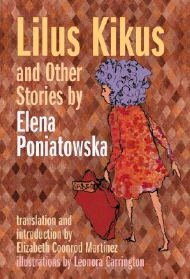
BOOK REVIEW | Lilus Kikus by Elena Poniatowksa


5 deconstructing stars.

Lilus Kikus by Elena Poniatowksa, on the surface level, is about a young girl and her adventures as she grows up.  This book was first published in 1954 erroneously as a child’s novel due to the age of the protagonist (although her age is never clearly defined) and the simplistic writing style.  However, Lilus Kikus is bursting at the seams with a feminist and anti-patriarchal agenda.  

 As a modern reader, the evidence of this book’s agenda is so apparently and blunt that the only explanation as to how it could ever be passed as a children’s novel is because the publishing industry in the 50s, especially in Mexico, was dominated by men and they just didn’t expect this sort of commentary from a woman.

The reader is first introduced to Lilus when she is outside playing.  Lilus does not like to play with dolls (which are traditionally feminine), instead she prefers to play doctor and perform experiments (traditionally masculine roles).  As she grows up, she joins an all-girls school where one of her closest friend, the “Lamb,” is being sent away due to pre-martial sex that resulted in pregnancy.  

When Lilus is talking to her next door neighbor, the Philosopher, he says this of the Lamb:

“The lamb, the lamb… let me think.  Ah yes, the feminist.  The free thinker.  … Well, life started too early for her.” Lilus herself is neither fully feminine nor fully masculine, but she knows better than to try and stand up for her female rights.  She knows she will end up exiled like the Lamb and decides that "she would rather keep quiet.  It is better to feel than to know."

Indeed, the Lamb was born into the wrong time period, where women are not allowed to commit the same “sins” as men or hold the same positions.  They are meant to be beautiful, vivacious and submissive: “Also, Lilus had heard it said that dummies were the most enchanting women in the world.”  

One of my favorite parts of this book is when Lilus is describing her good friend, Chiruelita, who is very naiive and innocent.   Chiruelita is the picture perfect idea of a "feminine" lady, of a "delicate" woman.  She ends up marrying an artist and obeying him easily, until the one day she decides to think for herself and “with a languid gesture, the eccentric artist wrung her neck!”

If that's not a blatant statement comparing the patriarchy to the silencing of women, then I don't know what is.  It is baffling to see how original readers missed all of this subtext.

Eventually, Lilus cannot be contained and is sent to a nunnery where she is completely oppressed, both by the patriarchy and the Catholic religion.  The ending is open – it can be read as Lilus searching for signs of rebellion or as Lilus searching for signs of God.  Either way, the message is clear: the woman’s place is in the silence of the men’s voices. 

All this in a “children’s” book.

Goodreads | Twitter | Facebook | Instagram | Booklikes | Leafmarks | Pinterest