Showing posts with label best novels to read. Show all posts

Sunday, December 29, 2019

ANNOUNCEMENT: Blogging Return & Upcoming Series!


Well, hello everyone! 

It's no secret that I've been gone from this blog for quite some time.  I even need to relink my social media accounts so that I can stop seeing those strange smiley faces!  I wanted to re-evaluate the way I wrote reviews; how much subjectivity do I want to place in a review?  How do I feel about the star system? (Spoiler: I don't like it and therefore do not give star ratings anymore unless it's a 5* because it just resonated with me.)  How do I want my reviews to be formatted?  Who am I trying to reach? 

All of these have been on my mind as I've toyed with the idea of coming back to book blogging and book reviewing.  Literature has, and always will be, my first love.  And I'm so grateful that I've been able to translate that love into others through my profession.


I've been having a great time living life and settling into my role as a teacher.  I've been teaching for 8 years now but I've been a middle school teacher for the past 4.  I'm currently finishing my MA and working part-time as an English and History teacher at an Orthodox Jewish school.  (They have their Judaic studies in the morning and their General studies in the afternoon.)  Teaching middle school has really opened my eyes to what students are reading and how much I want to encourage parents to let their students read and read voraciously.  Trust me, middle schoolers know so much more than you think and being exposed to new concepts is only going to help them become better adjusted adults. 

Thus my new series that I'll be starting on here is going to be called FOR THE  PARENTS.  These are going to be reviews of middle school/YA books where I will tell you what I liked about the book while also being open and honest about the content so that you can decide if your child is ready for it.  I do really recommend that parents think long and hard.  Literature is a good thing.  Reading is a good thing.  I hope that these reviews will help parents encourage their children rather than restricting them.


I've also been doing so much traveling, as you can see from some of the pictures I've been placing in this post. (I do have a travel blog here, by the way, if you're curious!)  Traveling and reading are my true passions, my true hobbies.  I've been lucky enough to travel to over 20 countries and teach in 4 of them.  And soon that will be 5!  I am currently in the midst of accepting a job in Kuwait for the upcoming 2020-2021 school year as an English teacher at an American Academy.

So what does this mean for my reading preferences?  On top of the FOR THE PARENTS series, I'd like to also start a BECOMING CULTURED series, where I read works by people of other cultures and about other cultures, whether it be historical or current.  This can include fiction and nonfiction, too.  I have been adoring traveling to new places, learning about events and seeing things for myself - as well as meeting absolutely lovely people - and now I'd like to take my mind there, too, when I'm unable to travel due to work. 


So, that's basically my long winded way of saying I'm back to book blogging & book reviewing and I hope to connect with the community again.  Let's get reading!

Friday, October 24, 2014

BOOK REVIEW | The Yellow Wallpaper by Charlotte Perkins

To summarize this book in one sentence: The Yellow Wallpaper is about a woman's descent into the harrowing grasp of Post Partum Depression while her husband and sister-in-law ignore her growing issues out of ignorance, blind righteousness and fear.

This story starts out seemingly harmless enough. A woman and her husband move to the countryside so that she can recover from a mysterious ailment. Her husband seems to be careful, even overprotective - "He is very careful and loving, and hardly lets me stir without special direction."- but with good intentions. The narrator wants to stay in the downstairs bedroom, but her husband insists on her staying in the ex-nursey with the horrendous yellow wallpaper.

As the story progresses, she becomes more and more fascinated, and frightened, by the wallpaper: "There are things in that paper that nobody knows but me, or ever will." As she continues her narration, the reader quickly discovers that there is something, very, very wrong. However, it is only the reader who notices this. All those around her seem to casually overlook her issues and they continue to grow and consume her.

Being trapped inside the head of a woman who is spiraling out of control is a terrifying experience. Her obsession with the wallpaper grows, she begins to see in it a woman who "wanted to get out", she becomes an insomniac, falls into paranoia and yet nobody does anything about it. The frustration I felt towards everyone around her, everyone who was seeing the effects of her PPD firsthand was something unlike I've ever felt while reading.

 Towards the end, she conflates herself with the woman she sees in the wallpaper, signaling her final break:  

"I've got out at least," said I, "in spite of you and Jane. And I've pulled off most of the paper, so you can't put me back!"

 I was honestly surprised by how chilling this was. I knew, going into it, that it was about PPD and I knew that it was a disturbing read, but I didn't expect it to affect me as strongly as it did. The honest truth is that PPD is still a very ignored problem among new and older mothers. We still live in a world where a woman suffering from PPD is forced to have more and more children and never get any help - which ultimately leads to her being jailed for trying to drown them, but her husband getting off with a simple slap on the wrist for ignoring her mental issues. The Yellow Wallpaper while written over a hundred years ago, holds a message that is still very relevant and important today.

Highly recommended. 82 accessible pages and maybe an hour of your time that will be well spent.

Saturday, October 18, 2014

BOOK REVIEW | The Night Circus by Erin Morgenstern


"The circus arrives without warning..."

It is a place of dreams, all in black and white, with spots of red on certain customers.  In this circus, you can watch a trapeze act that defies gravity, enter into a tent of stories, witness kittens jump through hoops, make wishes on wells, have your fortune read and more.  It is opened from sunset to sunrise and only stays a few weeks before packing and changing location.  Maybe it will come back to your town, but maybe it won't.

The Night Circus is a beautiful book about a whole cast of characters.  We have Celia, the magical protege; Marco, the studious student; Tsukiko, the contortionist; Bailey, the dreamer; Herr, the clockmaker; Poppet and Widget, the eccentric twins; Chandresh, the master; Tara, the one who saw too much; and many more.  They all work in a magical circus doing various activities, from performing to creating tents to handing out food.

What makes this circus so magical is that inside, unbeknownst to anyone except for the players, lies a game.  The rules are vague, the boundaries are flimsy and not even the participants really understand what's going on.

"I have never fully grasped the rules of the game, so I am following my instincts instead."

I would say how the game works is exactly how this book was written.  The language Morgenstern uses is beautiful and poetic, but very often it was hard to imagine exactly what she meant because she constantly keeps her reader in mystery.  This is done on purpose to create an atmosphere that could perfectly mimic the circus.  Although I loved how atmospheric this book was, sometimes not understanding the game and the temporal displacement of the novel were a bit too much.  There desperation of the characters was never properly conveyed to the reader, but we were told often of how one of the players was exhausted/on the brink of a meltdown, etc.  I never saw these meltdowns or complaints.  I never felt them.

As the game progresses and more and more lives are at stake, I could never really feel how on edge everything was.  There were very few moments when the circus would have a ripple that would cause something drastic, and when these drastic things happened I felt the panic in the moment, but never the build up.  Because the rules and stakes of the game were so vague, it was hard to feel any crescendo towards a climax.

The novel is full of beautiful imagery that gives a new name to originality:

"When she opens her eyes, they are standing on the quarterdeck of a ship in the middle of the ocean.  Only the ship is made of books, its sails thousands of overlapping pages, and the sea it floats upon is dark black ink."

"Inside, the train is opulent, gilded, and warm.  Most of the passenger cars are lined with thick patterned carpets, upholstered in velvets in burgundies and violets and creams, as though they have been dipped in a sunset, hovering at twilight and holding on to the colors before they fade to midnight and stars."

 In a way, a lot of the creativity of this story reminded me of The Girl Who Circumnavigated Fairyland in a Ship of Her Own Making.  Beautiful images, exciting prospects, interesting concepts.  The writing is what really propelled the book from being a nice read to being an amazing one.

Overall, I would recommend this book for fans of beautiful writing, for fans of experimental writing and for those that like fairy tales.  If you're the kind of reader who needs proper foreshadowing and likes to have concepts and situations thoroughly explained to them, this might not be a book for you.  For me, however, this book was beautiful and possibly the type of book you could read and re-read, finding more and more hidden secrets within.

Friday, October 3, 2014

BOOK REVIEW | Narrative of the Life of Frederick Douglass by Frederick Douglass

Frederick Douglass was born into slavery.  With a slave owning father - who was presumably his first master - and a slave mother, all Douglass ever knew was slavery.  However, even though he was a slave, he knew he was being denied his basic human rights without anyone telling him: "The white children could tell their ages.  I could not tell why I ought to be deprived of the same privilege." 

Douglass also offers an interesting insight into the emotions of slaves:

"Slave sing most when they are most unhappy.  The songs of the slave represent the sorrows of his heart; and he is relieved by them, only as an aching heart is relieved by its tears.  To those songs I trace my first glimmering conception of the dehumanizing character of slavery." 

This is before Douglass has learned how to read or write.  There is something innate in people that tells them when they are being wronged and Douglass knew that his condition as a slave - and the entire enterprise of slavery - was wrong.  But it wasn't just wrong for himself.  When describing his owner's wife, he describes her as angelic, as one of the first people who ever looked upon him with kindness and sincerely smiled at him.  However, "The cheerful eye, under the influence of slavery, soon became red with rage; that voice, made all of sweet accord, changed to one of harsh and horrid discord; and that angelic face gave place to that of a demon." (Emphasis is mine.)   He goes on to explain that when it came to Sophia Auld, the aforementioned woman, "Slavery proved as injurious to her as it did to me."  Douglass explains that she wasn't a born slave owner and that in the power of owning another being she became as corrupted as the worst of them.  The slaving system is detrimental not only to the slaves, but also to their masters.

Douglass also sheds a light on the hypocritical nature of the slave holder.  How the most pious of Christians turn out to be the worst of slave breakers, using the example of Mr. Covey: "Added to the natural good qualities of Mr. Covey, he was a professor of religion - a pious soul - a member and a class-leader in the Methodist church.  All of this added weight to his reputation as a "nigger-breaker."*  He then goes on to compare Mr. Covey to God, in what I can only imagine was meant to be a sardonic and ironic comparison by saying "His comings were like a thief in the night" when he went to go check on the slaves and make sure they were doing their work.

Throughout the narrative, Douglass is trying to establish his identity.  He is forming himself from nothing.  He has nothing to remember except a mother who used to sneak in to his plantation even though it was miles from his own to visit him, a grandmother who was left to rot by her slave owners and a father who may or may not have been his actual master.  When it comes time for him to find a name, he changes his surname a few times, from Bailey to Johnson and then eventually to the last name Douglass, which was actually given to him.  But when Mr. Johnson, the man who named him, gave him his name, Douglass told him that "he must not take from me the name of 'Frederick.' I must hold on to that, to preserve a sense of my identity."  At this point Douglass is a free man in the North, and his identity is that of an ex-slave, now married, and living a life where he can be his own master.  But there is power in that first name, as I believe it reminds him of where he came from and how hard it took for him to get to where he is.  There is power is names. 

The Narrative of the Life of Frederick Douglass is a narrative that is well worth the read, and I understand why it is required reading in high schools and colleges.   It offers an in-depth and personal look into slavery from an ex-slave's point of view while also being incredibly accessible and readable.  This review is a brief overview of the amount of subjects offered up, the themes involved and more.  To properly explain this book it would require multiple dissertations, but I hope it gave you interest in wanting to read it.  Highly recommended.

* I'm sorry to have had to use the "n" word in a review.  Please understand it was in the quotation and does not reflect my own speech.

Wednesday, October 1, 2014

SEPTEMBER WRAP UP

I cannot believe that October, my favorite month, is finally here!  I had an okay reading month. I think I didn't realize how much time school would suck out of me, haha.  So, my OCTOBER TBR will be a little more modest. ;)


Lilus Kikus and Other Stories by Elena Poniatowska.  Loved this so so so so crazy much.  I have a review HERE if you'd like to read more about it.


In the End by Demitria Lunetta.  Not as impressed by this one as I was by the first. There were a lot of parts that just didn't really make sense... I didn't post a review here, but I have a mini-review on Goodreads that you can check out HERE.


Rumble by Ellen Hopkins.  This book and I did not get along.  This was my only one-star read this month... and for a very long time, actually.  Find out why I didn't like this book HERE.


Narrative of the Life of Frederick Douglass by Frederick Douglass.  Perfect.  A book that absolutely everyone should read.  I'm working on a review of this one and should hopefully have it up by the weekend.


Like Water for Chocolate by Laura Esquivel.  A very weird and magical book.  When I finished it I wasn't sure if I loved it or hated it. Turns out, I kind of loved it.  But I'm warning you that things get a little strange.  It's called magical realism for a reason.


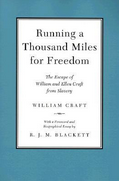
Running a Thousand Miles for Freedom by William and Ellen Craft.  This was my favorite book I read this month.  Only around 50 pages, full of information about the complexity of using race as a reason for slavery as well as a compelling and amazing story of how to people became free.  Really, really, really recommended. 


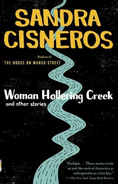
Woman Hollering Creek by Sandra Cisneros.  This was a collection of short stories written by Cisneros, who has a very declarative, staccato style.  But she also can weave a sentence so beautiful it's like watching someone paint.  Put those two contrasting styles together and you have the very interesting work of Sandra Cisneros.  Her Eyes of Zapata story was my favorite. 


What did you read this month?
If you'd like to follow what I read more closely, check me out on Goodreads.
If you'd like to see pretty pictures of what I'm reading, and books in general, you can find me on Instagram.

Friday, September 26, 2014

BOOK REVIEW | The Graveyard Book by Neil Gaiman

 5 creepy and magical stars.

The Graveyard Book is a deliciously creepy tale of a young boy who is raised in a graveyard by the dead. Nobody Owens ran to the graveyard when he was a baby after his parents and older sibling had been murdered. When the ghosts of the Owens family - a nice family who had always wanted children - saw him, they decided to keep him immediately. And thus, the graveyard became the baby's home, and Nobody became his name.

I've only ever read Stardust by Neil Gaiman before, but I think I'm starting to understand his style: a little bit of creepy, a little bit of action and a whole lot of magic. There are ghosts and ghouls abound in this book, as well as secret orders, and ancient tomb, a spirit animal - or what I think is a spirit animal, anyway - and a man who is both dead and alive. Nobody can "fade" himself and haunt a person and uses these tricks to his advantage to get out of some sticky situations, as well as for dealing justice at his school when needed.

I listened to the audiobook version of this, which was narrated by Neil Gaiman himself, and wow... I really recommend it. I'm in the car for three hours a day because of my job and my transit to school and this really added a nice little kick to my day. Even the kids I watch liked it and kept asking questions about it! Gaiman has a very versatile voice and can do heaps of different character voices, which always made me laugh. He also has a very soothing voice, so be careful lest he lull you to sleep like he did to me once.

This book is magic. Gaiman himself is probably magic. Highly recommended in whatever format you choose

Tuesday, September 23, 2014

TOP TEN TUESDAY: My Fall TBR


Top Ten Tuesday is a meme started over at The Broke and Bookish.  This week we are focusing on our top ten reads we plan on devouring during Fall.


1.  Dracula by Bram Stoker.  The perfect Halloween book, right?  And yet I've not read it!  I hear there's a pretty amazing audiobook of it featuring Allan Cumming and Tim Curry and ... I don't know, I might pick the audio over the written in this case, even though listening to classics hasn't worked out well for me in the past.  Either way, it needs to be read.  This fall.  Must happen.


2. Heir of Fire by Sarah J. Maas.  I think I probably just need to give up on this series, but I've been persevering.  This might be my last Maas book unless it really starts to pick up.  I'll have to write a post in the future about why these books just aren't working for me.


3. Dangerous Boys by Abigail Haas.  I read Dangerous Girls by this author and, other than the ending, I really liked it.  I think she has a lot of talent (but why that ending... I mean just why?) so if the ending for this one isn't a big "twist" I think I'll really like it.


4. Monstrous Beauty by Elizabeth Fama.  Beautiful writing + cursed love + mermaids = YES.  I've heard amazing, amazing, amazing things about this and am very eager to try it for myself.


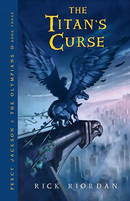
5.  The Titan's Curse by Rick Riordan.  I'm a little behind on the Percy Jackson series... but I'll get caught up!   To be honest, I'd love to get the original five read before 2015 but between other books + school, we'll have to see how that goes.


6.  Graceling by Kristin Cashore.  This is one of those books that has been on my shelf for far, far too long and I just need to get read already.  (To be honest, I have a lot of those...)


7. The Monk by Matthew Lewis.  Okay, "technically" this is a re-read, although not quite because I never finished it the first go.  Basically, this is a Victorian novel that is all flavors of messed up, mind bending insanity and I loved it.  I want to re-read it + finish it and it's very... Halloweeny?  It's dark is what I mean.  Perfect to read around the same time as Dracula.


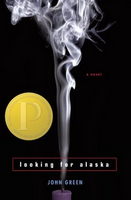
8. Looking for Alaska by John Green.  It's no secret that The Fault in Our Stars didn't work for me, but I do want to try out more works by him before I decide whether or not I like him.


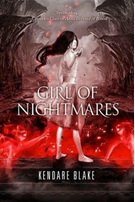
9.  Girl of Nightmares by Kendare Blake.  I read Anna Dressed in Blood back when it first came out and man, oh man.  That book was amazing.  It's sequel time.


10.  Frankenstein by Mary Shelley.  Yet another creepy classic I've yet to read.  This is very short and very good.  Some of my friends have told me that it's really a pity she didn't write more. 


Share your lists below!

Monday, September 22, 2014

What Kind of Reader are You?

I've been noticing a lot of reader shame in the book world lately, and I predict there will be many posts to come about book/reader pretentiousness and what not.  But for now, I want to help you establish what kind of a reader you are.

In the broadest sense, I believe there are two types of readers: The Thinker and The Feeler.


You may be a Thinker reader if you:


  • Are constantly analyzing books.
  • Need a logical occurrence of events to satisfy you.
  • Cannot suspend your disbelief.
  • Are a fan of deconstruction.
  • Prefer to read for the enlightenment of it rather than the enjoyment of it.
  • Do no relate to fiction characters/don't need to relate to the characters.
  • Base a book on its writing style and organization.

(Image credit here.)

You may be a Feeler reader if you:


  • Read books solely for the enjoyment of it.
  • Prefer to be entertained than educated.
  • Find yourself getting way too involved in a character's life.
  • Need to actually like the protagonist to enjoy the novel.
  • Prefer plot and character over good writing.


In general, Thinker readers read more: classical literature, literary fiction, and sci-fi.

In general, Feeler readers read more: YA, fantasy, romance and children's/middle school lit.

Here's a point I want to make: both types of readers are equally valid and equally important.  They both add something new and different to the reading community and how boring would it be if we were all Thinkers/Feelers?

I am getting quite sick of Thinker readers looking down on Feelers for being too "vapid" or for "not reading proper books."  I'm also quite sick of Feeler readers looking down on Thinker readers and finding them to be too "pretentious" or that they "think too much."  Just because you only read classics does not make you better than the person who only reads YA.

In my opinion, only reading any one type of book is dangerous.  I don't care if you've read every single YA or classic novel ever written, but have you ever read a book by a hispanic woman, or a gay man, or a book by an African about his experiences? Have you read any romance?  Have you branched out to epic fantasy?  Have you read any Slave Narratives? (Because I've been reading a lot lately, and they are well worth the read.) What about literary fiction?  Magical realism?  Why are you limiting yourself to one thing?   If you only read the same type of novel, you will only think the same type of thoughts and there will be no room to grow.

That being said, I do think it's important that we start respecting each other's reading decisions.  While I don't think all books are created equal, I do believe that each type of reader should have the freedom to choose what they want to read without fear of being judged for it.

Personally, I think I'm a Thinker reader with very high Feeler tendencies.  But what about you?

What kind of reader are you?

Facebook | Twitter | Goodreads | Instagram | Leafmarks
Booklikes | Tumblr | Pinterest

Sunday, September 21, 2014

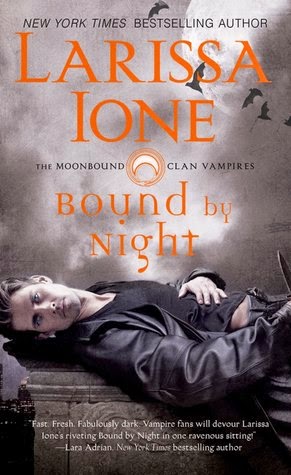
BOOK REVIEW | Bound by Night by Larissa Ione

2 blood sucking stars.

I am so disappointed to be giving this book two stars. I should preface this by saying everything else by this author has been a great hit for me. I love her Demonica series and can't wait to start her Lords of Deliverance series, which I have heard is equally fantastic. One of the things I love about Demonica is how crazy sexualized the demons were.  I mean, that series is one where you will find yourself blushing throughout the entirety of it.  And it's awesome.  

I didn't have that same giddy, excited feeling with this book.  This series deals with vampires, not crazed sex demons, so clearly there are going to be vast differences. I had acknowledged that in my head, but I'm not sure I had accepted it yet until I realized that all of the craziness that I loved in the Demonica series just wasn't going to happen. I mean, there's still plenty of sex. I think there were four decent scenes, and the chemistry between the two characters is... okay?  I guess I just wanted something more, if that makes sense. It's probably unfair because I'm comparing apples and oranges demons and vampires, but I think anytime you've ever read an author's work previously, you always have expectations.

On to the flaws and merits of the book: I have to question the basic premise. Why are vampires slaves if they're better than humans in every way? They're stronger, faster, have better eyesight... they're a natural predator to humanity. This being the case, wouldn't history have taken a different turn than the one presented in the novel? The logical course would be vampires rising into dominance and enslaving the humans, but, instead, the reader is meant to believe that it is vampires that have been "domesticated." I couldn't help wondering how this happens and, unfortunately, a concise answer was never given. It is possible that it is a slow reveal throughout the series, but my review is intended for this book. 

I also didn't like how Riker and Nicole, the two main characters, had sexy-times with each other even though there was so much hatred between them. I know hate-sex is a thing, but this wouldn't fall into that category. Nicole was literally afraid of him. She is terrified of vampires and their culture and everything they stand for because of what happened to her as a child, but she suddenly forgot about all that fear in the heat of the moment? She forgot about something she's been in therapy for years for because she wanted to bang a vampire? I have to question how she'd even want to have sex with a vampire she didn't love after all she'd been through. I didn't think that this was a believable build up of the characters or the tension between them.  And, unfortunately, this feeling of "unbelievable" permeates throughout the entire novel.

All in all, if this had been my first Larissa Ione book, I might have enjoyed it more. But because I've already read other books by her - books that I really, really love - it felt flat and ill-planned. I'm not too sure if I'll end up reading the second, but I do want to know what happens after the Epilogue, which was my favorite part of the book (and is quite telling as to how unenjoyable the rest of it was).

Goodreads | Booklikes | Leafmarks | Twitter | Facebook | Pinterest | Instagram | Tumblr

Friday, September 19, 2014

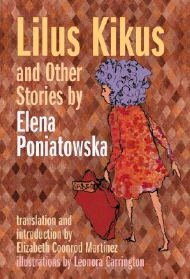
BOOK REVIEW | Lilus Kikus by Elena Poniatowksa


5 deconstructing stars.

Lilus Kikus by Elena Poniatowksa, on the surface level, is about a young girl and her adventures as she grows up.  This book was first published in 1954 erroneously as a child’s novel due to the age of the protagonist (although her age is never clearly defined) and the simplistic writing style.  However, Lilus Kikus is bursting at the seams with a feminist and anti-patriarchal agenda.  

 As a modern reader, the evidence of this book’s agenda is so apparently and blunt that the only explanation as to how it could ever be passed as a children’s novel is because the publishing industry in the 50s, especially in Mexico, was dominated by men and they just didn’t expect this sort of commentary from a woman.

The reader is first introduced to Lilus when she is outside playing.  Lilus does not like to play with dolls (which are traditionally feminine), instead she prefers to play doctor and perform experiments (traditionally masculine roles).  As she grows up, she joins an all-girls school where one of her closest friend, the “Lamb,” is being sent away due to pre-martial sex that resulted in pregnancy.  

When Lilus is talking to her next door neighbor, the Philosopher, he says this of the Lamb:

“The lamb, the lamb… let me think.  Ah yes, the feminist.  The free thinker.  … Well, life started too early for her.” Lilus herself is neither fully feminine nor fully masculine, but she knows better than to try and stand up for her female rights.  She knows she will end up exiled like the Lamb and decides that "she would rather keep quiet.  It is better to feel than to know."

Indeed, the Lamb was born into the wrong time period, where women are not allowed to commit the same “sins” as men or hold the same positions.  They are meant to be beautiful, vivacious and submissive: “Also, Lilus had heard it said that dummies were the most enchanting women in the world.”  

One of my favorite parts of this book is when Lilus is describing her good friend, Chiruelita, who is very naiive and innocent.   Chiruelita is the picture perfect idea of a "feminine" lady, of a "delicate" woman.  She ends up marrying an artist and obeying him easily, until the one day she decides to think for herself and “with a languid gesture, the eccentric artist wrung her neck!”

If that's not a blatant statement comparing the patriarchy to the silencing of women, then I don't know what is.  It is baffling to see how original readers missed all of this subtext.

Eventually, Lilus cannot be contained and is sent to a nunnery where she is completely oppressed, both by the patriarchy and the Catholic religion.  The ending is open – it can be read as Lilus searching for signs of rebellion or as Lilus searching for signs of God.  Either way, the message is clear: the woman’s place is in the silence of the men’s voices. 

All this in a “children’s” book.

Goodreads | Twitter | Facebook | Instagram | Booklikes | Leafmarks | Pinterest

Tuesday, September 16, 2014

TOP TEN TUESDAY: Authors I've Only Read Once


Top Ten Tuesday is a weekly meme created by The Broke and the Bookish.  This week's full theme is "Authors I've Only Read One Book From But NEED to Read More."  (I'm tweaking it a bit to include short stories.)

In no particular order, here are my Top Ten Authors I've Only Read Once:


1.  Joyce Carol Oates.  I read Oates's short story "Where Are You Going, Where Have You Been" in university and fell in love.  She has this magnificent way of creating a subtext that can be interpreted in a multitude of ways.  I ended up writing an entire paper on this short story and found that the interpretations are endless.  I actually own her novel, Mudwoman, and will hopefully get to it early next year.


2.  Cat Winters.  I buddy read Cat Winters' debut novel, In the Shadow of Blackbirds, with Brandi from The Book Geek a year or so ago and fell in love.  Both of us ended up tossing our read-a-long schedule to the wind because the book was just that good.  I've heard her new book, The Cure for Dreaming, is equally phenomenal. 


3. Elena Poniatowska.  Ms. Poniatowska was one of the only female voices being published in Mexico before the 60s and her work, Lilus Kikus, was originally mistaken for a child's novel.  If you were to read it today, however, the feminist subtext is so blatant that I'm still amazed anyone could have thought it a children's story to begin with.  She has been a fervent voice for Mexican women and was originally a journalist.  Since Lilus Kikus, which I read, she has published a number of different books, short stories and journalist pieces detailing the position of women in the Mexican patriarchy.  I've technically read more than just one book by her, because I've read a few of her stories too, but she is an author I desperately want to read more of, and I encourage you to do so, too. 


4.  Kathryne Kennedy. Diving into a few romantic reads, Ms. Kennedy has a beautiful writing style that I found easy to engage in.  I was interested in the characters, I thought her world building to be fascinating and all around just really enjoyed my experience while reading her.   I've only read The Fire Lord's Lover, which I recommend to anyone who's a fan of romance, but I cannot wait to get my hands on more from her.  It honestly was one of the most beautifully written romance novels I've ever read.


5.  Rainbow Rowell.  I posted a review of Rainbow Rowell's Fangirl, which I absolutely adored.  I have honestly only heard good things about this author.  I know she has three other books out, one YA and adult, and I have been anxious to read them.  And honestly, who couldn't love an author with an amazing name like "Rainbow."  She's already inherently fabulous by default.


6. Laura Whitcomb.  Laura Whitcomb is the author of the beautifully written YA novel, A Certain Slant of Light.  This novel was my favorite read of 2012 and made it onto my personal-favorites list as well.  The prose in this is just to die for and she tackles tricky subjects with elegance and grace.  I'm very much looking forward to reading more by this author.'


7. J.R.R. Tolkein.  He's a legend.  He's a master.  He's a genius.  And yet I've only read The Hobbit by him.  At this point, being a 24-year-old fantasy lover, there's really no excuse.  As you can imagine, The Hobbit is filled with fantastical world building, interesting characters and lack of women.  (I'll do a post on the underrepresentation of women in fantasy novels soon.)  Reading The Lord of the Rings is one of my goals for 2015.  Because the time is now, my friends.


8. Margaret Atwood.  Ms. Atwood is one of the greatest writers of our time.  The voices she gives to women in literature, the light she shines on the dangers of patriarchy and the heart-wrenching tales that she writes have all earned her a spot on the "Best Authors of the Era" list.  I've only read The Handmaid's Tale, but found her prose filled with fascinating subtext.  She's an author I've been meaning to read more of for years.


9. Gillian Flynn.  I had very mixed feelings about Gone Girl, some of which stemmed from the book itself and others from the expectations I had before going in.  I'm still torn as to whether or not I think she's a good writer, but I do think she's an interesting storyteller.  I won't say too much, because I do have a review of Gone Girl coming soon, but she is an author that I think it worth more than one read. 


10. Don DeLillo.  DeLillo has a lot to say and he manages to get his message across using a relatively short page count.  He just screams satire.  He's honestly one of those authors that I'd recommend everyone give a try.  Even though he might not be your cuppa, you'll probably still appreciate what he's trying to achieve.  I've only read his novel White Noise, but very much need and want to read more by him.


Who are YOUR authors you've only read once and need to read more from?