Showing posts with label literature. Show all posts

Saturday, December 29, 2018

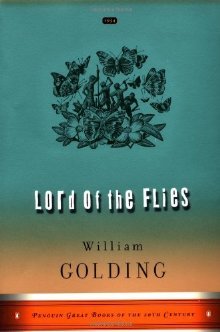
BOOK REVIEW | Lord of the Flies by William Goulding

7624

What a pity that so many adults had a bad experience with this novel in  high school that they never want to pick it up again. 

At first glance, this novel seems innocent enough: a group of English school boys find themselves stranded on a remote island and must learn survival skills to stay alive.  However, the direction that the author took this seemingly harmless premise could make anyone fall into an existential crisis. 

Truly, the mastery that went into "Lord of the Flies" is astounding.  There is so much allegory just leaking off the pages that sometimes I think people can get too caught up in the intellectual aspect of the novel.  And there truly is a lot to be discussed.  The island follows the same fate as the Garden of Eden.  As the boys fall more and more into their darker selves, the island itself becomes a character taking on an evil turn.  

In fact, this book has been banned and challenged relentlessly due to the fact that, in the end, Goulding's message is that all of humanity is evil at its core

This novel focuses on the murder of reason, the death of goodness and the dark truth of what it means to be human.  So much is condensed into this roughly 200 paged book that it's hard not to find yourself in a deep conversation about the human condition.   However, even though it is a well of conversation starters, as an adult I found myself more and more affected by the boys' deaths and descent into madness.  When reading this as a high school student, I was encouraged to focus only on the academic aspect of the novel.  But when reading it as an adult, I couldn't help but focus on the emotional side of it, too.

There were times when I read this that my blood ran cold.  Other times I felt myself in such shock that my body went numb.  I didn't have any of these experiences when I was a teenager.   I didn't have a connection like this with the book before.

I can't recommend that adults re-read (or read for the first time!) this novel enough.  And I hope in doing so, they'll find more meaning and more emotion than they experienced before. 

Wednesday, September 24, 2014

John Milton, Censorship, and the Murder of Reason. #BannedBooksWeek

In honor of #BannedBooksWeek, I figured I definitely needed to make a post on the horrors of censorship and how it limits intellectual growth.  Over the years, various governments, usually those based in religion, have banned books that they think have an agenda against their own.  Normally, these books do have a different point of view, but that is what makes them great.

I recently read John Milton's Areopagitica.  This essay is an appeal to the Papacy to drop the legislative censorship act that they had just put into motion.  It's a selfish piece.  Milton was viewed as heretic by many church members and he was afraid of his work being censored or unpublished.  However, regardless of his intention in writing it, the meaning inside of it is relevant: you need to read all kinds of books to decide what you think is right or wrong and you should never be limited in your intellectual - and ultimately moral - journey.

For Milton, books are not just things we passively observe.  They are active, alive beings that we must consume.  The more we consume, the more we can figure out our personal ethos and the more we will be able to see right from wrong.  If books that are deemed wrong by "tyranny and susperstition"* then members of society who can read will all begin to think the same, and in thinking the same there can never be any change.

I've pulled a few quotes for you that resonating strongly with me, as a reader:

"...for books are not absolutely dead things, but do contain a potency of life in them to be as active as that soul was whose progeny they are; nay they do preserve as in a vial the purest efficacy and extraction of that living intellect that bred them."

"... as good almost kill a man as kill a good book: who kills a man kills a reasonable creature, God's image; but he who destroys a good book kills reason itself..."

Killing a book is worse than killing a human being in the eyes of Milton because you are killing the living essence of reason.  Censorship is the act of killing reason.

I thought it would be good to look three banned books and explain why they were banned:


 Madam Bovary by Gustave Flaubert
Why was it banned?: It was banned because it went against "public morals" due to the wife taking on a lover while she was married.**  Although books with men taking female lovers haven't seemed to have ever been banned.


1984 by George Orwell
Why was it banned?: It was banned by the USSR because Stalin recognized it as a satire on his leadership.  He didn't want a revolution to take place.  The US almost banned this book as well during the Cuban Missile Crisis


To Kill a Mockingbird by Harper Lee.
Why was it banned?: It was banned due to the racial slurs, profanity, rape and other unpleasant images in the novel.  It is still one of the most challenged novels in schools today.

I chose these three books to focus on because I wanted to point out why different books are banned.  A woman taking control of her sexuality is scary and must be banned.  The people realizing how terrible their government is and being incited to revolution is scary and must be banned.  Racial slurs, rape, etc. is offensive and must be banned.  And these things must be banned even if the larger message, like Harper Lee's To Kill a Mockingbird, is actually anti-racism.  The books must be banned even if their message is one of the most revolutionary ones of history, because it contains "dirty words."  

Establishments will come up with any reason to ban a book, whether it be for sexual, religious or political reasons.  They will mask these reasons by trying to tell you that banning these books is "good for you" and "protecting your innocence."  But it's not.  It's good for them, not for you, and the act of censorship will never be beneficial to the individual.  Of course, you can run the risk of being "contaminated," and beginning to think in a more violent way, for example, but that is where Milton's personal ethos comes into play: that we must read as much as possible, see the reactions and the failures in history and literature, to grow and expand as a people.  As readers, and as people, I hope we will continue to fight for our literary freedom.

* All quotes by Milton come from the Oxford World's Classics John Milton: The Major Works.
** Information comes from Wikipedia and Bannedbooks.world.

Monday, September 15, 2014

BOOK REVIEW | The End of the Affair by Graham Greene

4 crazy stars.

First things first: I listened to this narrated by Colin Firth and he has a sexy voice. I feel like it's pertinent to note this.

I described The End of the Affair like this to one of my friends: It's about a crazy man lusting after his crazy ex-lover under the watch of a crazy god in a crazy world.

If I do say so myself, I believe my synopsis nailed it.

The writing was gorgeous, pensive and fluid.  Quite often, it can be hard to appreciate good writing when listening to an audiobook, but this book boasted such gorgeous prose that I believe it doesn't matter what format you devour it in.  The characters were tainted, innocent, corrupt and complicated. This is the kind of book where the synopsis sounds crazy (a man wanting to stalk his ex-lover), but the writing makes it almost philosophical. 


Morris, the narrator, is a jealous man; jealous to such a degree that I don't think I have ever met anyone so jealous. When Morris meets Henry again, the husband of his ex-lover Sarah, he finds that Henry has been suspecting his wife of an affair. Our narrator then hires a private investigator to stalk both Sarah and Henry, becoming inextricably linked into their lives again, falling deeper and deeper into their relationship and his own jealousy.  He wants to know if Sarah is having an affair and he also wants to know more about Henry, the man Sarah chose over them.  And in becoming so utterly involved in their lives, he begins to love them as well.

Throughout the book, there are many references to God and how the characters don't believe in Him. They are so adamant about it, so absolutely certain to the point that it doesn't sound certain at all. Sometimes things happen -- these things that happen everyday can be seen through the lens of rationality or faith; meetings can be coincidence or fate; healings can be psychological or supernatural; love can be a simple mixture of neurons and synapses or magic. What is comes down to is that it is about how much you're willing to see, in both directions. Morris wasn't willing to see anything. Morris, quite frankly, was blind.

Recommended for fans of The Great Gatsby and Their Eyes Were Watching God.